 Back to Listing
From the classroom to the marketplace: Arizona’s public universities fuel the next wave of startups
Inferno Invitational Startup Cup highlights the statewide pipeline of student-driven innovation.
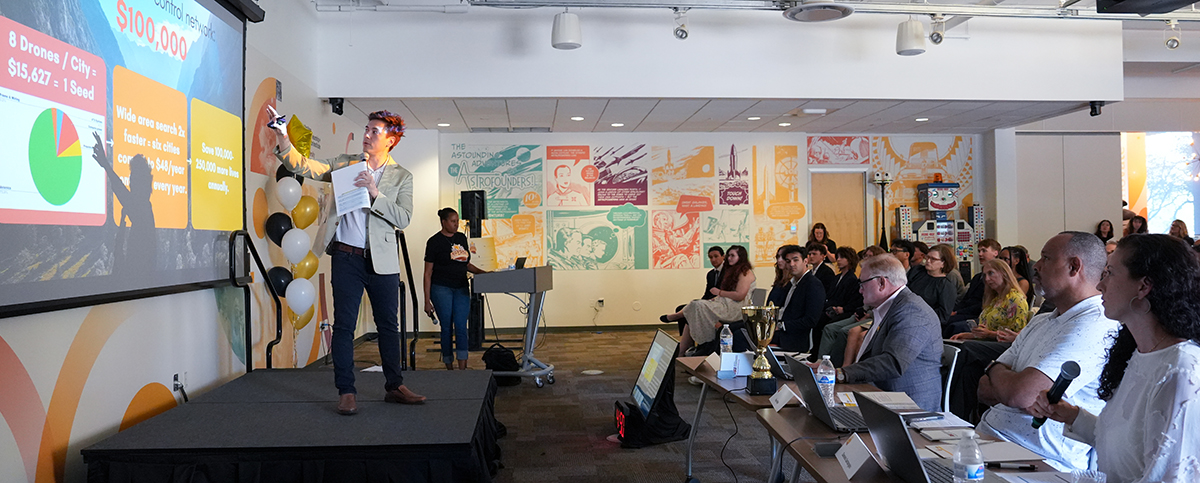
On stage at Arizona State University’s SkySong campus, student entrepreneurs presented their market-ready business ventures, showcasing how Arizona’s public universities are helping students turn innovation into enterprise. Some pitched new approaches to improving health care delivery, and others shared their ideas to improve sustainability or new ways to use artificial intelligence to streamline everyday processes. Each venture shared a common goal, building something that can work and compete in the real world.
That entrepreneurial spirit is part of a broader shift taking place across Arizona’s public university campuses. During the second annual 2026 Inferno Invitational Startup Cup, student-led startups from founders at ASU, Northern Arizona University and the University of Arizona competed in a high-stakes pitch competition. Supported by a shared commitment to entrepreneurship championed by the Arizona Board of Regents, students competed for the chance to win up to $100,000 in funding from the ASU eSeed Challenge and the Prescott Student Venture Fund to help turn their early ideas into real-world businesses.
Regent Gregg Brewster was one of a panel of judges, which also included Daniela Santangelo, founder of Freeway, and Tony Wells, venture partner at Copper Sky Capital, evaluating the pitch presentations for their scalability and long-term impact. He spoke highly of the participants as each student team pitched their ideas into viable businesses.
“What makes this competition so powerful is not just the ideas, but the level of execution these students bring,” Regent Brewster said. “You’re seeing founders who understand their markets, their technology and their impact. It’s very clear many of these ventures won’t stop at the classroom. They’re real companies in the making.”
Logan Milano, an ASU student and founder of Amryth, earned the top $100,000 prize. Rowan Brandenburg and Jaya Wartson, NAU students and founders of Fude Dude, received the $2,500 Audience Spark Award, selected by attendees who voted for the venture they most want to see grow.
For Arizona, the competition reflects more than student achievement. It highlights how the state’s public universities are making high‑level innovation resources available to students early, giving them a head start in developing the technologies, products and businesses shaping the future of industry.
At ASU, a strong culture of innovation and collaboration has fueled student-led ventures across high-growth industries. Through its Venture Devils program in the J. Orin Edson Entrepreneurship + Innovation Institute, ASU and Maricopa Community College students are offered a full suite of resources to support entrepreneurial success. These resources include mentorship, funding opportunities and pathways to commercialization. It has awarded over $450,000 to ventures each year and over 1,000 venture teams have participated in the program.
At NAU, entrepreneurship is taking a distinct community-centered approach that blends research, partnerships and hands-on startup support. Through NAU Innovations, the university’s technology development and commercialization program, students have the opportunity to work directly with researchers and faculty to move discoveries from the lab to marketplace. For example, High Entropy Security, a cutting-edge cybersecurity technology offering ways to create resilient networks, is preparing for commercialization thanks to a Regents’ Grant and support from NSF I-Corps. The cybersecurity lab at NAU has created more than 100 patents and allows researchers to develop technology they can commercialize.
At U of A, Tech Launch Arizona, the university’s technology transfer arm, generates $459.7 million in annual economic impact and supports thousands of jobs statewide. Since its inception, Tech Launch Arizona has received over 3,000 invention disclosures and issued over 800 patents. Most recently, student-led startup FutureState is modernizing mobile ID systems, resulting in how universities manage student and staff credentials. Their efforts remove long-standing barriers in the mobile credential space. In addition, the W.A. Franke Honors College hosted the inaugural western regional finals of the Hult Prize on April 17 and 18. The contest, supported by international education firm EF Education First, challenges college students to solve pressing global issues with viable business ideas that address one of the United Nation's Sustainable Development Goals.
These efforts reflect how university-driven startups are contributing to Arizona’s economy. By aligning resources across all three universities, the state is creating clearer pathways for students to launch companies and stay in Arizona. With significant investment already flowing from university innovation and a growing support network in place, Arizona is establishing itself as a place where ideas move beyond the lab and into the market.